 Mainstream Weekly
 Memoirs of an Exalite | Sreejith K
BOOK REVIEW
__0__
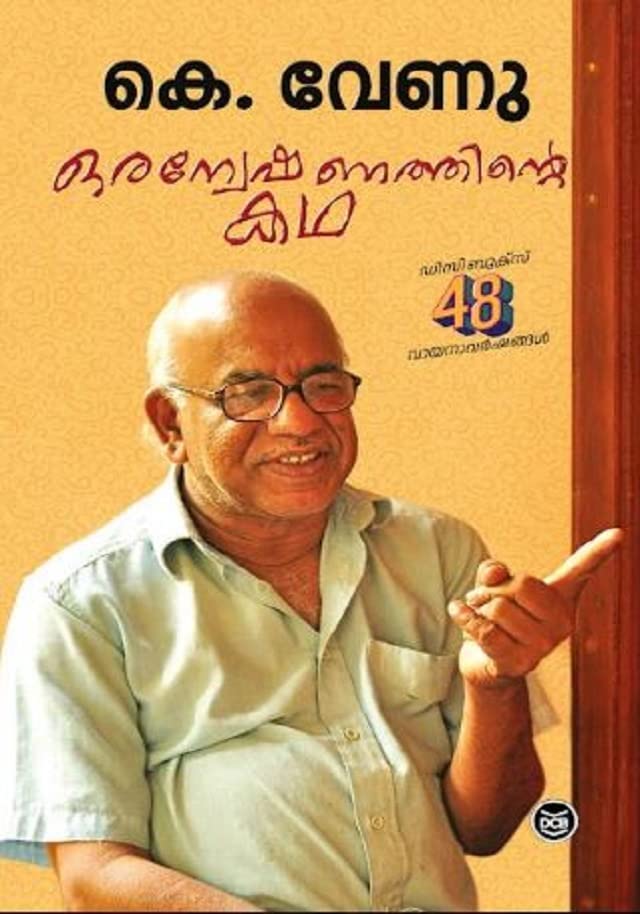
Oranweshanathinte katha
by K. Venu
DC Books
2023, 752 pages
ISBN: 9789354829383
__0__
Reviewed by Sreejith K
In an iconic scene from Sandesham, which has over the years acquired a cult status amongst the Malayalis for its trenchant political satire, a communist party worker, Sreenivasan, during a pennukaanal (would-be bride seeing), after some perfunctory questions on Marxism to the bewilderment of the girl, asks her whether she would be willing to spend the rest of her life with a revolutionary on the run with the police close on his heels. Needless to say, the marriage never materialises, and, in fact, it was only the timely intervention by the marriage broker that saves everyone concerned further embarrassment. Though in slightly different circumstances, when K. Venu writes in his autobiography of the decision to embark on the path of revolution and consequently the ending of his relationship with the one woman he ever loved, even if there is no comedy involved, it is hard not be reminded of that movie scene.
Yet, at the end of the sixties of the last century, it looked as if Venu was heading for a career in the Sciences. He was working, on the recommendation of the CPI(M) intellectual, P. Govinda Pillai, at the State Institute of Encyclopaedic Publications in Trivandrum. His Prapanchavum Manushyanum (Universe and Man) would soon be published to critical acclaim, and he was looking forward to doing doctoral research from some university. But the first phase of the Naxalite uprising in the state would have a deep impact on him, especially the killing of Varghese in a fake encounter, as he says in this book, after which he would plunge headlong into the movement and become its prominent face for the next couple of decades.
Ideological differences and personal incompatibilities ensured that he Naxalite movement, from the beginning, remained disorganised. Charu Majumdar and Kunikkal Narayanan, the leader of the first phase of the movement in Kerala, for instance, could not even agree on whether feudalism or imperialism constituted the primary contradiction in the country or, indeed, whether the annihilation of jenmis or attack on police stations would best resolve them. Varghese and others had reservations regarding the credibility of Ambady Sankaran Kutty Menon, the man Charu Majumdar picked to lead the movement in Kerala, and their misgivings did not appear misplaced when he would later join the Congress. Meanwhile, there were rumours of Kunikkal being on the payroll of the CIA, and other Naxalites already in prison would give him a hostile reception when he was brought in. In a movement, thus, riven with factions from the outset, the authorities would sow further seeds of mistrust. Venu recollects how, while in custody, the police officer, Jayaram Padikkal, tried to convince KN Ramachandran and others that the former was a paid agent of his, an allegation which Venu takes great pains to counter in this book.
It is one of the ironies of a movement which professed the annihilation of class enemies as a legitimate means to bring about a more egalitarian order